When I die I don’t want no coffin
I thought about it all too often
Just strap me in behind the wheel
And bury me with my automobile
– James Taylor, 1977
The old Volvo got Berra numberplates today. Suppose that means I’m really here now.
 I took the Tasnarnian ones in to Territory & Municipal Services and sighed a little as I handed them over. I’ll miss the slogan, Tasmania – Your Natural State; it’s suspect on so many levels. The bloke at TAMS then requested a sum that would have been funny if it wasn’t true, and after I stopped choking and handed over a credit card, he handed over new plates with a slogan pointing to the ACT Centenary in 2013. At least other drivers will no longer curse me for a “bloody Tasmanian Volvo driver”.
The Berra is a city of cars and driving. Almost nowhere is walking distance, and that includes from one end of Garema Place (the main mall in the CBD) to the other. True, there’s not a lot of traffic most of the time so nowhere is very far away – if you have a car. Before re-registering the Ovlov, we had decided to become a one-car household, which would have been manageable if at times inconvenient. As it turned out the car market isn’t quite depressed enough for our wallets just yet, so that project is on hold.
But all the research did make me think about how many people in the Berra feel about cars. They loooooove them.
In the Berra, you can pick where the party is by the dozens of vehicles parked outside, littering the naturestrip. Colleagues with teenage children routinely moan about how many cars they have to maintain, just so their kids can drive themselves to their a part-time job. One of the most bitter arguments fought by Berran couples is over whose turn it is to be the designated driver, because unless you’ve saved for a month for the taxi fare, you need a designated driver. The house across the road from us has three adults, but seven vehicles (okay, two are up on blocks. But still.) Large tracts of open land in the busiest suburbs that would have developers elsewhere tearing each other’s limbs off to acquire are in the Berra tarred and used for carparks. There is almost no incentive to give up one’s car, apart from the punishing registration fees. Public transport buses are universally inconvenient and you can’t walk anywhere.
For someone who didn’t feel the need to get a driver’s license until I was 24, this motor-centric way of life seems dreadfully indulgent. I hear many people say they’d rather not drive all the time, but there’s a deep apathy towards transport reform in the Berra too; everyone seems to be waiting for someone else to do something. And no-one wants to refuse their employment-packaged car.
While we’re talking about what the Berra is (and isn’t), as someone said to me recently the Berra is a city of clubs. (It’s certainly not a city of pubs, to my lasting disappointment.) It’s been fascinating to watch the slow disintegration of the Cronulla Sharks Club in Sin City in recent weeks, as it crumbles under the weight of its amassed, generational block-headedness. I’m unaccustomed to this club culture that pervades NSW and the ACT as it doesn’t exist in the Australian suburbs where I grew up, yet barely 12 months in the Berra and I am a member of no less than three clubs. I think my memberships are mostly about food (yum cha and seafood feasts) but for most locals they’re about sports, or gambling and inexpensive drinks.
Anyway, just days before that 4 Corners story aired, I found myself at the Berra’s night-of-nights for clubs, their annual Awards for Excellence. Wow, a chance to glimpse the inner workings of this juggernaut that involves so many Berrans. It was no small matter. There were more than 700 people glammed up and crammed in to the Southern Cross Club, one of two giant club edifices perched on the edge of the Woden shopping centre precinct. As you might expect, it was cheesy but pleasant. The night was 60s-themed, with waitstaff dressed in retro gear and a Beatles cover band on the stage. The people on my table, a mix of local pollies, sportspeople and club people, were really lovely. The food was good, you didn’t want for a drink, the assembled crowd of men and women of all ages were having a good time. It was clear that for many the club can be a lifetime commitment; from the time you pull on your boots aged five, through your job, your family’s social life, a career path in multi-million dollar hospitality management for your daughter, to your post-retirement hub of activity, the club is there. These were all elements of stories told through the awards.
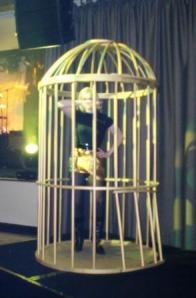 But there were two things that bothered me about the night. The first was the pair of cages at the sides of the stage, in which danced two girls; weird, but perhaps it was something to do with the theme, I thought. Then, at a point later in the presentation, the MC jock paused to chat with a sponsor about the women in low-cut dresses who were handing awards to the recipients.
“I understand you provided the girls for this evening,” said the jock to the sponsor. “Very nice. Very tasty.” The sponsor laughed.
He used just the tone two blokes might use to discuss meat, or similar bought object or commodity. This was all on the main stage, through microphones, before an assembled crowd of 700 which included smart, switched-on women and their husbands, brothers and fathers.
I nearly fell off my chair. “Did I really hear that?” I said, very loudly, to my colleague. No-one else on that table of 10, men and women alike, paid me any mind.
Which strikes me, now, as exactly the kind of attitudinal rope by which the Cronulla Sharks are now hanging themselves.










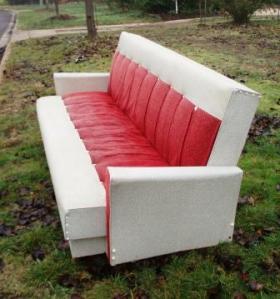 I noticed this couch out on the naturestrip recently. Gorgeous vintage vinyl, I was quite prepared to install it in my loungeroom in place of the ageing beast lurking in the corner (the present couch, not the Bald Man). Sadly, closer inspection showed why it was abandoned – the timber and horsehair insides were literally rotting, the legs snapped off, the stitching unravelling. It was beyond my rudimentary furniture repair skills to save.
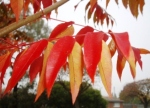 It must be autumn in the Berra. Pedestrians wade through drifts of leaves, or skid down footpaths carpeted with acorns, and the
 Once I got my doublethinking cap on, I was very impressed by some of the items they’ve preserved. An actual German V2 rocket. Woah. I had no idea a V2 was so BIG. Its direct inspiration for the space race was evident. The V2 was displayed next to a prototype of another experimental rocket that the Third Reich never got to deploy across the Channel – one of only two such prototypes in the world, apparantly.
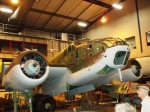
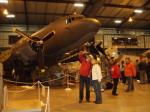
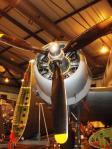 A fully restored Centurion tank, repainted to original specs – who knew that inside all that steel, the bench seats and sections of the floor were still made of wood? All manner of aircraft – a Dakota, a Beaufort, a Canberra Bomber and a M*A*S*H-type helicopter all in a row. Anti-aircraft guns – the engineering differences between the German and Japanese weapons were so great, it was difficult to see that they served the same function. Transports, cannon, radial engines, field kitchens, shells, torpedoes, sea mines, a Salvation Army tea-and-cordial truck, modified farm vehicles turned to combat, ancient portable barbecues, a Singer sewing machine.
  My doublethinking cap slipped momentarily when I turned a corner and saw tucked up on a shelf some little tin boats used to land troops on beaches; thoughts of Gallipoli mixed badly with images from the opening scenes of Saving Private Ryan (an otherwise terrible movie, those opening scenes still give me the horrors). To fight back is sometimes necessary, but war is a dirty business, and it’s good to remember that at both ends of all these machines – the pointing ends and the pointy ends – there are real human beings.
 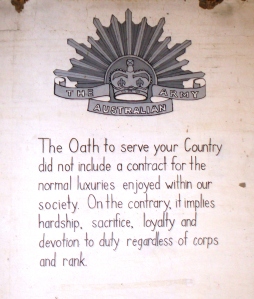 Some of the items showed the social history of combat and service, and they spoke of a culture in which teamwork and getting on with the job were paramount. No doubt the ability to pull together meant the difference between life and death in combat. There’s both harshness and humour evident in those unofficial communications.
 The Berra Circular